What Is a Default Diary and Why It Matters for Business Success
In my business coaching practice, one of the most common frustrations I hear is, “There’s so much to do.” The sheer volume of tasks can leave even experienced professionals feeling overwhelmed. When that happens, productivity stalls, not because people lack skill or motivation, but because they lack structure. This is where the default diary becomes a game‑changer.
What Is a Default Diary?
A default diary is a pre‑planned weekly schedule that allocates time blocks for recurring activities. Think of it as the business equivalent of a school timetable. Just as students know that Monday at 9 a.m. means maths and 10 a.m. means English, a business owner’s default diary defines when to focus on marketing, client work, team meetings, and strategic planning.
Unlike a traditional diary that records appointments reactively, a default diary is proactive. It sets the rhythm of your week before it begins, ensuring that essential tasks always have a place. It’s not about being rigid,its about creating a reliable framework that supports flexibility without chaos.
Why Businesses Need One
Reduces Overwhelm and Decision Fatigue. Every day, business owners make hundreds of decisions. A default diary removes many of those micro‑choices by pre‑deciding how time will be used. This frees mental energy for higher‑value thinking and creativity.
Ensures Strategic Priorities Get Done. Without structure, urgent tasks crowd out important ones. By assigning time for planning, marketing, and financial review, the diary guarantees that long‑term priorities aren’t lost in the daily rush.
Improves Team Coordination. When leaders share their default diary, teams know when they’re available and when they’re focused on deep work. This transparency reduces interruptions and builds respect for each other’s time.
Creates Consistency and Momentum. Business success often comes from the compounding of small, consistent actions. A default diary turns good intentions into habits, such as weekly client follow‑ups, content creation, and KPI reviews.
Supports Work‑Life Balance. By scheduling personal time with the same discipline as business tasks, owners protect their wellbeing. The diary becomes a visible reminder that rest and recovery are part of sustainable performance.
Example of a Default Diary
Here’s what a simple weekly structure might look like for a business owner:
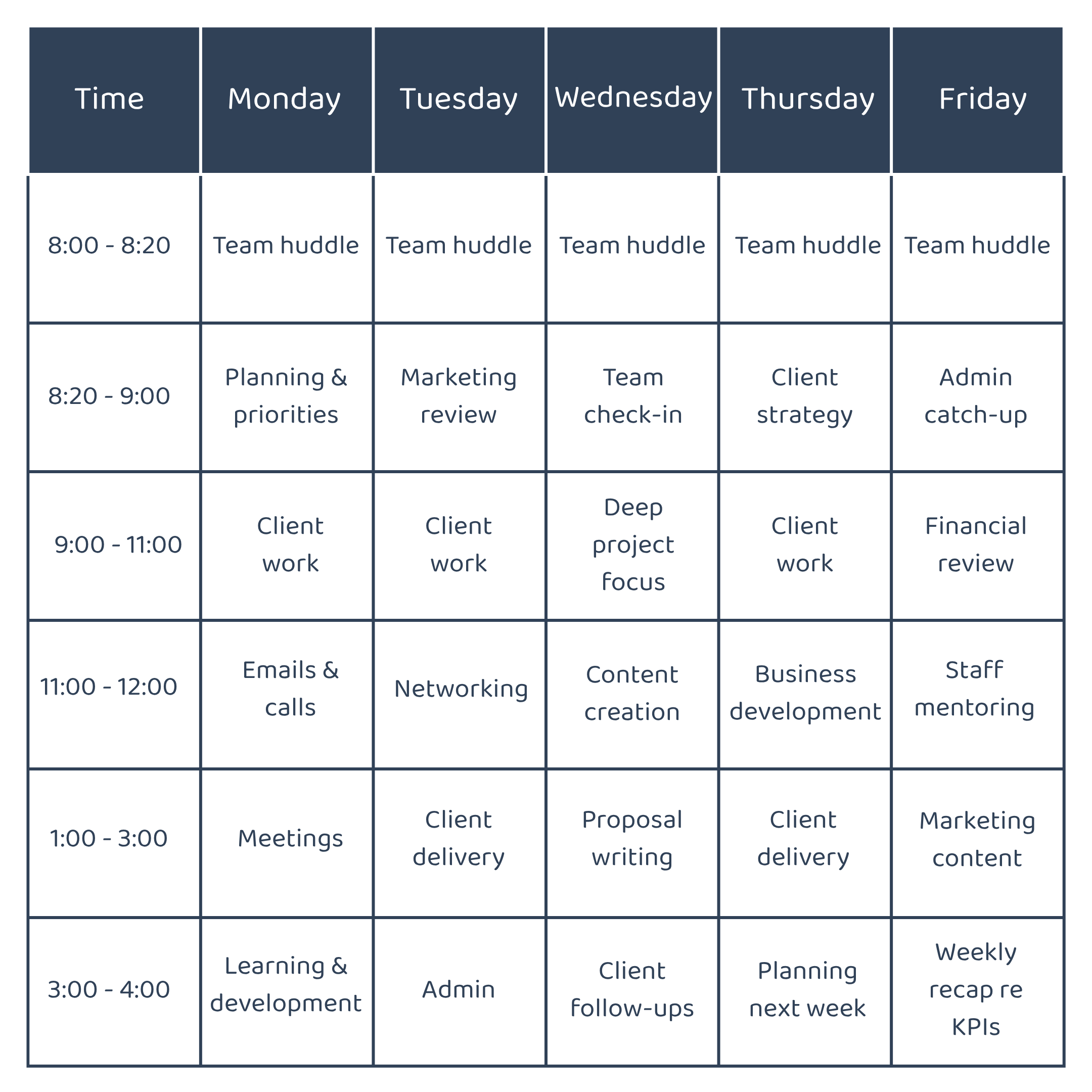
This structure isn’t set in concrete, it evolves with the business. The key is that each block has a default purpose, so when the week begins, there’s no confusion about what deserves attention.
Making It Work
To implement a default diary effectively:
Make a list. Write down all the big tasks that you need to be covering: sales, marketing content, financial review, KPI’s, admin, team mentoring, working with customers, etc
Start small. Map your ideal week, then test it for two weeks.
Protect your time. Treat scheduled blocks as non‑negotiable appointments.
Review weekly. Adjust based on what worked and what didn’t.
Communicate clearly. Let your team know your focus times and availability.
The Bottom Line
A default diary isn’t just a scheduling tool; it’s a leadership discipline. It transforms reactive busyness into intentional productivity. By designing your week around priorities rather than pressures, you create space for growth, clarity, and calm.
In short, the default diary helps business owners do what schools have mastered for decades: ensure that every subject, every part of the business, gets the time it deserves, and that is what will accelerate achievement.