
The Importance of a Vision and Mission Statement to Help Accelerate Achievement
Many small business owners I work with don’t have a clearly defined vision or mission statement when we start working together. On the surface, this might be alright. After all the business is running, customers are being served, and the day‑to‑day work gets done. But here’s the real question: Where are you going, and how does your team know how to get on board if the destination isn’t clear?
A business without a vision and mission is like a vehicle without a GPS. You might be moving, but you’re not necessarily moving in the right direction. And when times get tough like we are seeing at the present, fuel, cost of living etc clarity becomes one of the most powerful tools you have.
Many business owners also struggle with the difference between a vision and a mission. They sound similar, they feel similar, and because of that, people often get confused and end up doing nothing. But once you understand the distinction, everything becomes easier.
What Is a Mission?
Your mission is the purpose of your business. It answers the question:
“Why do we do what we do?”
A mission is steady. It doesn’t change with trends, markets, or seasons. It’s the heartbeat of the business — the reason you exist beyond making money.
A strong mission statement should be simple, powerful, and emotionally resonant. As Richman (2015) notes, it should speak to both your employees and your customers. Why? Because if you don’t take care of your people, they can’t take care of your customers. A mission begins internally, shaping culture, behaviour, and expectations before it ever reaches the outside world.
Examples of Mission Statements
Google: “To organise the world’s information and make it universally accessible and useful.”
Tesla: “To accelerate the world’s transition to sustainable energy.”
Nike: “To bring inspiration and innovation to every athlete in the world.”
Each of these statements is clear, purposeful, and anchored in service — not products.
What Is a Vision?
Your vision is a picture of your preferred future. It’s imagined, but not imaginary. If everything goes right — if your mission is lived out consistently — your vision becomes real.
A vision answers the question:
“What would we do if we could do the impossible?”
It’s aspirational, energising, and future‑focused. The vision serves the mission by giving it direction. It’s the bigger story of what the business is becoming and what the people inside it are working toward.
Examples of Vision Statements
Microsoft: “To help people and businesses throughout the world realise their full potential.”
IKEA: “To create a better everyday life for the many people.”
Amazon: “To be Earth’s most customer‑centric company.”
These visions are bold, expansive, and designed to pull the organisation forward.
Compare the differences between Mission and Vision
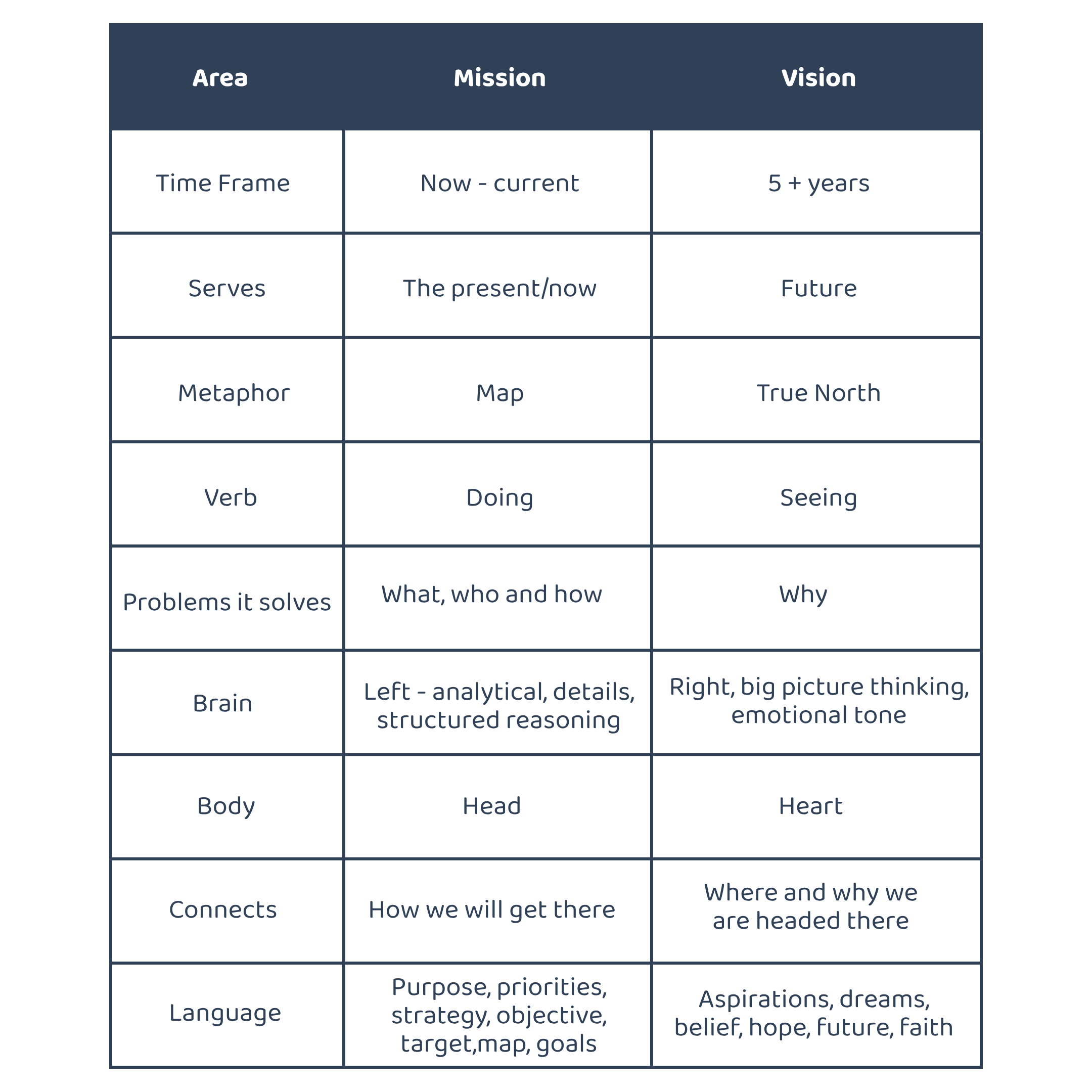
Why Vision and Mission Accelerate Achievement
When your mission and vision are clear, decision‑making becomes easier. Priorities become obvious. Your team knows what matters and what doesn’t. You stop reacting to every external pressure and start moving with intention.
A mission keeps you grounded.
A vision keeps you moving.
Together, they create alignment, momentum, and resilience.
Reference
Richman, R. (2015). The culture blueprint: A guide to building the high-performance workplace. Culture Hackers.