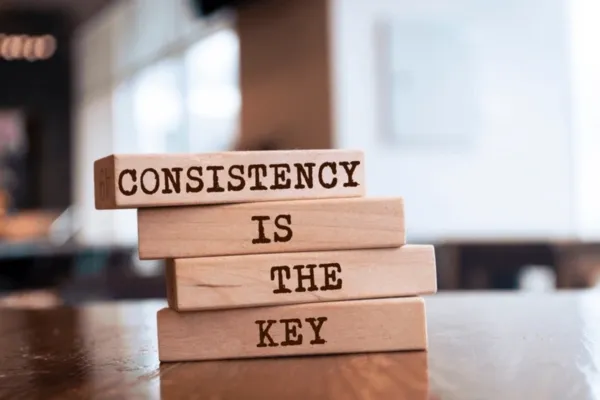
Consistency, a Key Driver for a Strong and Sustainable Business.
Last week, I delivered a seminar to a group of farmers in Goulburn (NSW) on numbers and metrics for decision‑making, and the consistency of reviewing these metrics so recalibration can happen quickly. I was also in Brisbane last week to be part of a group where the topic of consistency came up again. It’s a theme that keeps resurfacing because it sits at the heart of sustainable business performance.
Consistency (n), as defined by the Cambridge Dictionary, is
“the state or condition of always happening or behaving in the same way.”
In business, that definition translates into reliability, predictability, and trust, three qualities that underpin every successful enterprise.
Consistency is not glamorous. It’s rarely exciting. It’s the quiet, repetitive work that compounds results over time. The problem is that being consistent often feels monotonous. It’s the weekly (without exception) blog you write, the daily sales huddle you hold, the regular review of your cash flow or client pipeline. It’s the unseen work that builds momentum and credibility long before anyone notices. Consistency is what separates those who achieve sustained success from those who experience short bursts of progress followed by long plateaus.
In farming, business, or leadership, consistency is the bridge between intention and outcome. You can have the best strategy, the most innovative ideas, and the strongest team, but without consistent execution, none of it sticks. Consistency compounds like interest: small, repeated actions create exponential results. When you show up every day, review your numbers, refine your systems, and communicate clearly, you create a rhythm that others can trust. That rhythm becomes your reputation. Consistency is the behaviour that earns trust, and trust is the outcome that fuels loyalty, collaboration and long-term success.
The challenge is that consistent work is rarely thrilling. It’s routine, tested, and proven, but not always fun. Yet it’s precisely this routine that gives you a competitive edge. When others lose focus or chase novelty, consistency keeps you anchored. It ensures that your marketing doesn’t drift, your customer experience doesn’t fluctuate, and your team knows what “good” looks like every single day. Consistency builds confidence, both internally and externally. Your clients learn they can rely on you; your team learns what excellence feels like; and you learn that progress is not about intensity but about persistence.
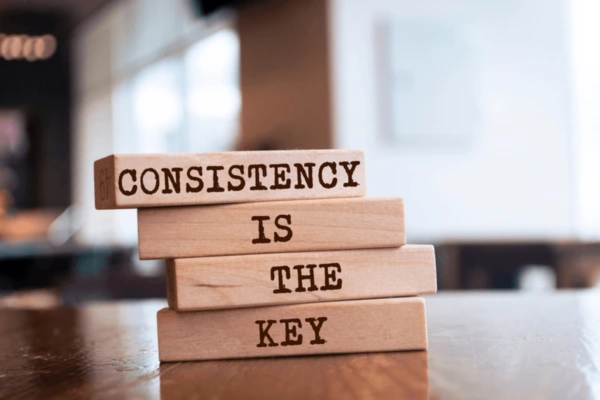
Consistency also drives clarity. When you repeat key behaviours, reviewing metrics, following processes, and communicating expectations, you reduce noise and decision fatigue. You start to see patterns, identify bottlenecks, and make better decisions faster. Inconsistent businesses waste energy reinventing the wheel; consistent ones refine the wheel until it runs smoothly.
Think of consistency as the invisible infrastructure of success. It’s what allows creativity, innovation, and growth to flourish because the foundations are stable. Without it, even the best ideas collapse under the weight of inconsistency. A business that communicates sporadically, markets irregularly, or reviews performance only when things go wrong will always struggle to build momentum.
The truth is, consistency is a discipline, not a mood. It’s about doing the work even when you don’t feel like it. It’s about showing up when results aren’t immediate. It’s about trusting the process long enough for the process to pay off. Every time you choose consistency over convenience, you strengthen your business muscle.
So, ask yourself: where do you need more consistency? Is it in reviewing your financials, following up with clients, maintaining your marketing rhythm, or leading your team meetings? The areas where you feel resistance are often the ones that need consistency most.
Consistency doesn’t mean rigidity; it means reliability. It’s the steady heartbeat of a business that grows with intention, adapts with awareness, and performs with purpose. When action gets traction, consistency is the force that keeps it moving forward.
Consistency is a key driver for a strong and sustainable business. The question is - are you disciplined enough to be consistent?
Let me know your thoughts.