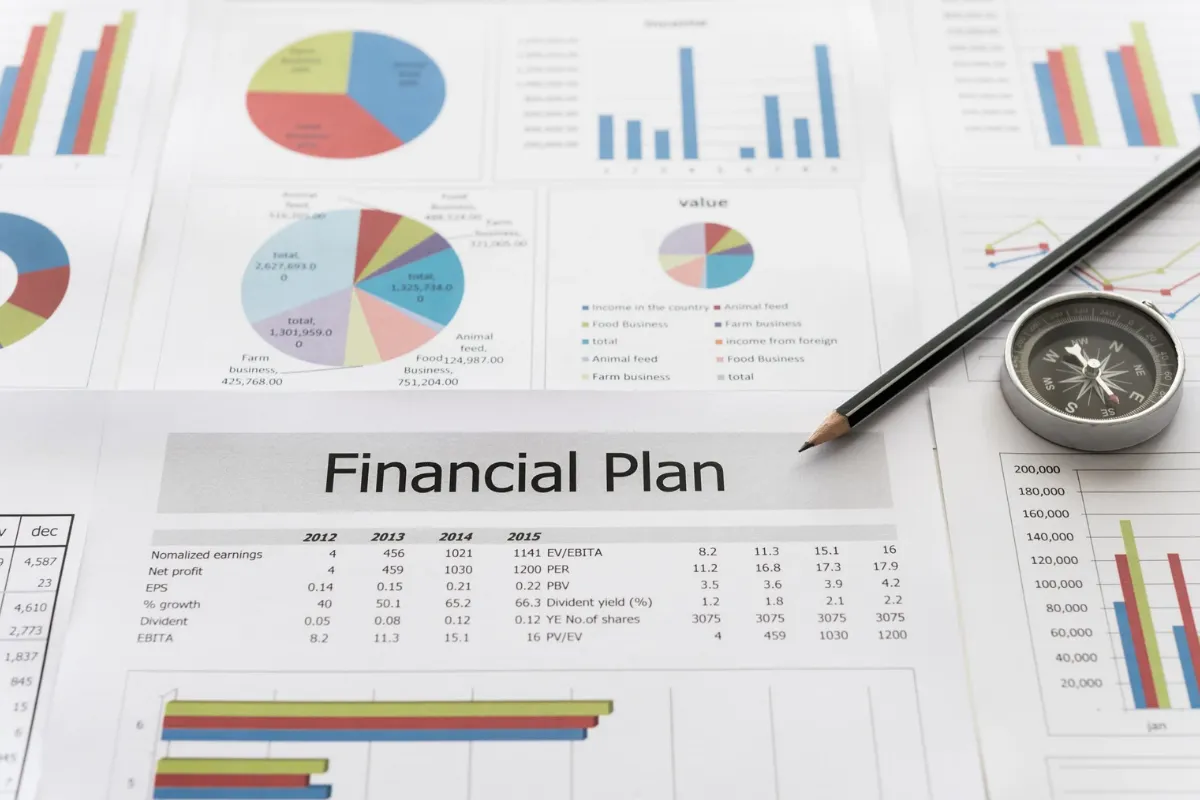
Are you Measuring Activity or Value Creation?
What is the one financial metric that matters most in your business? What serves as your guiding light, helping you determine whether you are doing a great job? Is it revenue, profit, client retention, return on assets managed (ROAM), or perhaps something else entirely?
The old management saying remains as relevant today as ever: what gets measured gets managed. The metrics we focus on inevitably shape our decisions, behaviours, and ultimately our results. Yet many business owners track dozens of numbers without identifying the one measure that truly reflects the health and performance of their business.
I was speaking with a client last week whose guiding principle is ROAM, or Return on Assets Managed. Rather than focusing exclusively on top-line revenue, they assess how effectively their business generates returns from the assets under management. It provides a clear lens through which to evaluate performance, capital allocation, and long-term decision-making. Every major business decision is tested against its likely impact on ROAM.
That conversation reminded me of a webinar I recently ran with a group of farmers. We were discussing the concept of return on assets and whether their businesses were generating sufficient returns relative to the capital invested. It sparked an interesting question: if a farming business cannot consistently generate returns that exceed what could be earned through a relatively low-risk bank deposit, is the capital being used effectively?
This question becomes particularly relevant in the current economic environment. The Reserve Bank of Australia cash rate currently sits at 4.60%, meaning that many term deposits and savings products are offering comparatively attractive returns with significantly lower risk than owning and operating a business. The cash rate influences borrowing costs throughout the economy and serves as a benchmark against which many investors assess the opportunity cost of their capital. [rba.gov.au], [rba.gov.au]
Of course, comparing business returns directly with bank interest is not entirely fair. Business owners take on substantially more risk, complexity, and workload than depositors in a savings account. However, the comparison provides a valuable reality check. If a business consistently generates a return below the risk-free or low-risk alternatives available in the market, it may prompt important questions about strategy, efficiency, pricing, or capital allocation.
This doesn't mean that every business should adopt ROAM as its primary metric. A professional services firm may place greater emphasis on profit margins. A growing startup may focus on customer acquisition and recurring revenue. An advisory business might track funds under management or client retention. The right metric depends on the business and its strategic objectives.
What matters most is choosing a measure that reflects the true value being created and then monitoring it relentlessly. Too often, business owners celebrate revenue growth while profitability declines, or focus on turnover while overlooking the capital required to achieve it. Growth without adequate return can be an expensive illusion.
The most successful business owners I work with know their numbers intimately. More importantly, they know which number matters most. Their chosen metric guides decisions, creates accountability, and provides clarity when opportunities and challenges arise.
So, what is your guiding light? What is the one financial metric that tells you whether your business is truly performing? Whatever that number may be, make sure it is measuring not just activity, but value creation. After all, what gets measured gets managed, and what gets managed well is far more likely to accelerate achievement.